Article: Anatomy of the Coven AL Rim: The Part That Meets the Trail
Anatomy of the Coven AL Rim: The Part That Meets the Trail
Anatomy of a Tenet Component | No. 02
When you case a landing or clip a square-edged rock, the rim is the first part of the bike to find out. It takes the hit, keeps the tire seated, and holds 32 spokes in tension the whole time.
A lot of aftermarket alloy rims start life as an open mold: a profile the factory already makes, sold to whichever brand places the order, finished with that brand's logo. The aluminum can be perfectly good. The brand just didn't decide anything about its shape.
For our first rim, we didn't want to buy somebody else's shape and put a sticker on it. The Coven AL is built on a custom extrusion we drew ourselves, so every choice in its cross-section is one we made on purpose.
The shape is the design
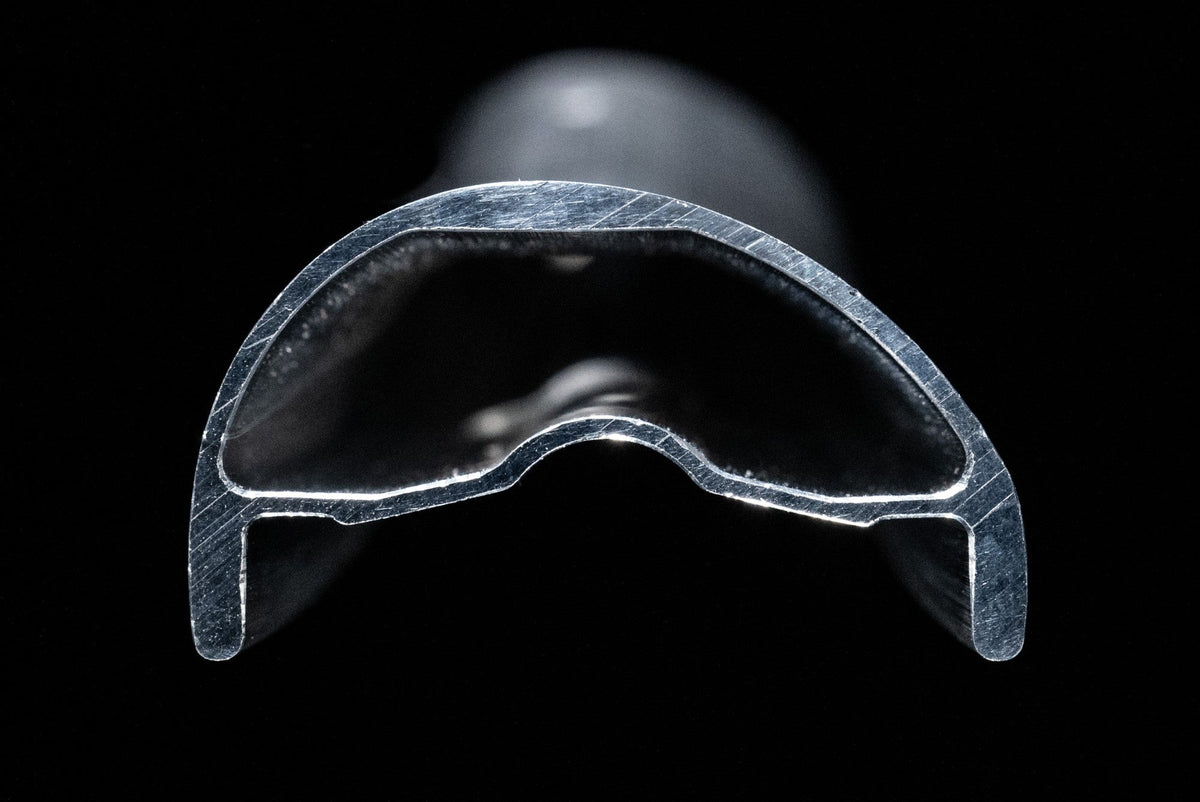
An aluminum rim starts as a long, straight extrusion: aluminum pushed through a die, which gives the rim its cross-section. That extrusion is rolled into a hoop and the ends are joined. On the Coven, the joint is welded.
Drawing our own die is what let us decide where the spoke bed sits, how broad the bead is, and how tall the profile gets. With an open-mold rim, those answers come pre-installed.
Three millimeters off center
Every wheel builder works around the same problem. On a rear hub, the cassette pushes the drive-side flange toward the middle of the wheel, so those spokes stand nearly upright while the non-drive spokes lean out wide. To pull the rim into center, the drive side has to run much higher tension. Disc rotors cause a smaller version of the same imbalance up front.
The low-tension side is the first to go slack when the wheel takes a big hit, and slack spokes let a wheel wander out of true.
The Coven's spoke bed sits 3 mm off the rim's centerline. With the rim oriented correctly for the hub, the spoke angles on each side move closer together and the tension gap shrinks. It doesn't make dish go away, but it gives your builder a better starting point than a symmetrical rim. One rider who laced up a rear Coven said in their review that they were impressed by how even the drive and non-drive tension came out.

The 32 spoke holes are also 4D drilled. Each hole is angled toward its spoke's hub flange and in the direction that spoke travels, so the nipple sits in line with the spoke instead of bending it at the rim. Because those angles are set for a specific spoke path, the Coven is meant for three-cross lacing only.

Material where the hits land
A tall, deep rim is generally very stiff vertically, which is less welcome on a trail that's mostly roots and chunder. The Coven is 20 mm tall, on the low side for a modern mountain bike rim, and we developed that profile with vertical compliance in mind.
Shallow doesn't mean skimpy. The aluminum is concentrated where the rim works hardest: an extra-thick 2.4 mm hookless bead where the tire sits and takes impacts, and a substantial spoke bed where the spokes pull on the rim. It measures 30 mm inside and 34.8 mm outside, and it's made from 6069-T6, a higher-strength relative of the 6061 aluminum used in a lot of bike parts.

Tire, pressure, spokes and build quality all shape ride feel too, so the rim doesn't do it alone. Riders who have built Covens describe them as stiff without being harsh, which is what we were after.
Polish, mask, blast
A lot of rims get their graphics from a decal. The Coven's logos are part of the finish.
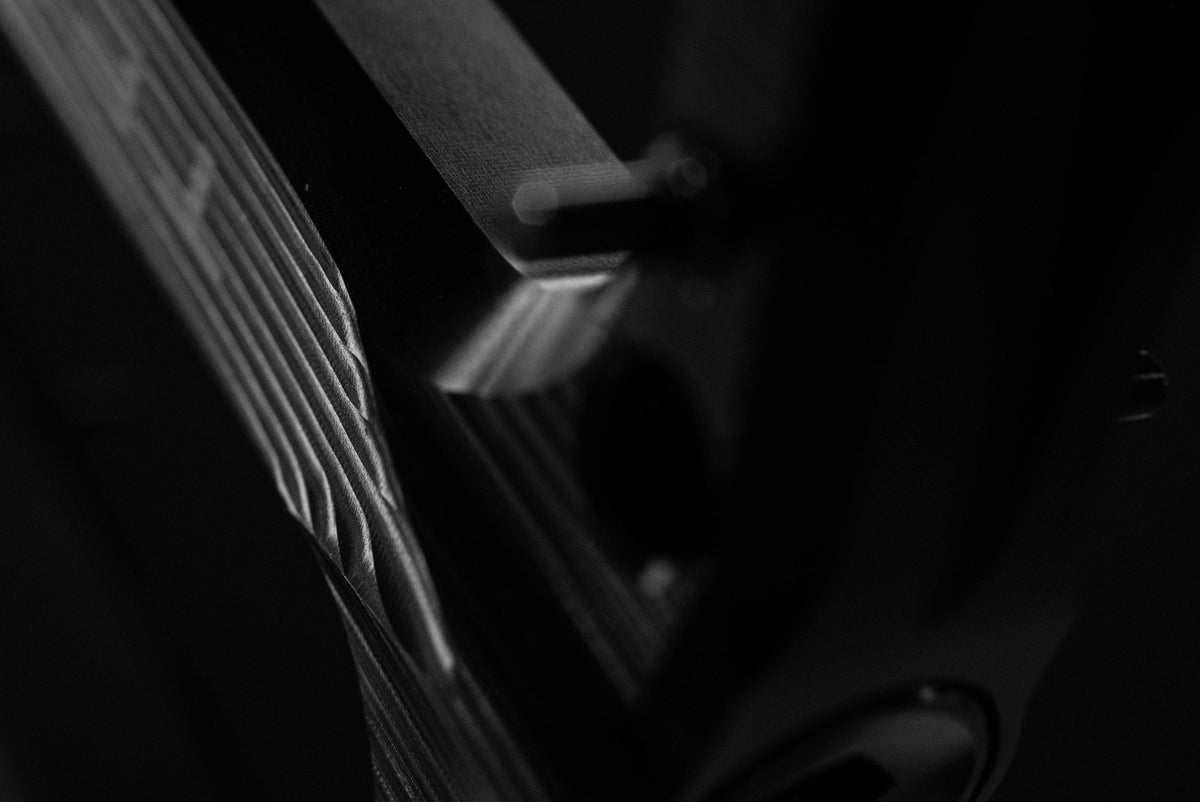
We polish the whole rim, mask off the logo areas, and media blast everything around them. When the masking comes off, the logos are bright polished aluminum set into a textured surface, with no sticker to peel off or get chewed up by a tire lever.


If you want to match your frame, custom decals can add color over the polished graphics without wrapping the whole rim.

The Coven comes in Onyx and Silver. If you've gone looking for a silver mountain bike rim that's built to be ridden hard, you already know how short that list is. More than one Coven review says the same thing.

What to know before you build
Riders who have built and run Covens have been straight with us about a couple of things, so we'll pass them along.
Mounting a tire takes some effort. One builder called fitting a gravity-casing tire a serious workout and figured it was a fair price for a bead that holds on. Soapy water and good levers help.
Take your time with tubeless tape. The center channel is deep, and a flexible tape lays in more cleanly than a stiff one.
It isn't a weight-weenie rim. Claimed weights are 574 g (27.5) and 606 g (29). It's built for riders who would rather have a rim that survives their line choices.

For your builder:
- ERD: 567 mm (27.5) / 605 mm (29)
- Offset: 3 mm asymmetric
- Drilling: 32 holes, 4D, three-cross only
- Width: 30 mm internal / 34.8 mm external, 20 mm tall
- Material: 6069-T6 aluminum, welded seam
- Sold as: one rim, not a complete wheel
Our spoke calculator works out spoke lengths from your actual parts. Check the results with your builder before ordering spokes. Rather skip the build? Coven wheels are the complete option.
When the rock wins
Sooner or later, one of those hits wins. The Coven is covered by our lifetime warranty for the original purchaser, including damage from normal riding. A dent that won't hold air, a cracked bead, a separated seam or a crack at a spoke hole is a warranty claim. A dent that still holds air falls under crash replacement.
Warranty rims carry a $30 flat-rate shipping fee, and shop or build labor is on the rider. Coverage is for riding incidents only. If your damage doesn't qualify, or you know exactly what you sent it into, crash replacement gets you 30% off a new one. Full warranty details and claims here.
A shape of our own
Once the tire is on and the wheel is built, you'll probably never see the Coven's cross-section again. Its shape still decides where your spokes land, how evenly they pull, and what the rim has to work with when you get your line wrong.

That is the anatomy of the Coven AL Rim.